First, in case you are not familiar, here is an example of our sound from our latest EP…
So, I bought an octave pedal from my favorite effects pedal company ElectroHarmonix and decided to give it a go. After some quick messing around, we decided it worked! Here’s what I came up with.
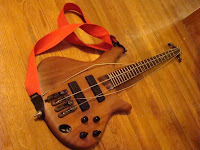
It all begins with an Ibanez SoundGear SR3000 bass. I am sure the very specific particulars of the instrument do have an effect on the sound, but I think the key component is that it has an active pickup and can output a pretty strong signal. I put this instrument through quite rough treatment. Here is a photo of it after I broke two strings during a song live recently (link to video).
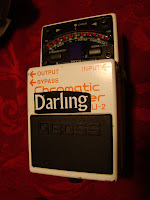 I use the simplest splitter (multipurpose even) in the world, a BOSS chromatic tuner. I take the output channel and send it directly to my bass amplifier and take the bypass channel and send it to the remainder of my “guitar” rig. Stomping this pedal (turning the tuner on) then shuts off the signal to the bass side of the rig, but not the guitar side.
I’d have to work really hard to find a less fancy bass rig than I’ve got. I use a Hartke HA3500 amplifier head with a 115 cabinet . I like the amp’s blend of tube and solid state channels (I mostly crank the tube channel). I rarely use the amp’s EQ and I never use the compression.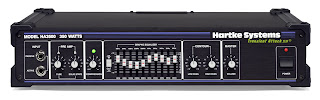
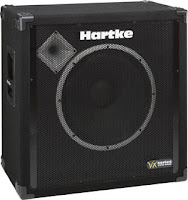
I’ve always used cheap, get-the-job-done type cabinets. I got a Hartke VX115 because it was light and the 15-inch speaker gives me great low end. As I am sending a lot of mid and high signal to the guitar rig, I didn’t really care too much about a cabinet with much of anything other than low end. Main criteria: cheap, not too heavy, and not too big.
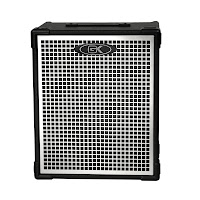 More recently, I switched to the Gallien-Krueger 115MBE 1×15 Ultra Light Bass Speaker Cabinet. It’s smaller, lighter, can handle more power, and, at least to my ears, sounds better. All-in-all, it’s a win!
That’s it for the bass side of my setup!
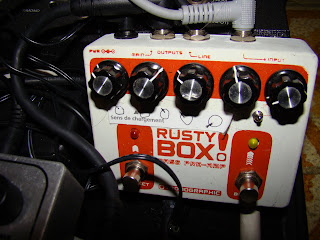 The guitar side is a little more involved, but not too crazy. I did everything I could to keep it simple. I start things off with what I consider to be my secret weapon! The Rusty Box is a boutique bass pre-amp pedal designed to help replicate the bass tone of Bob Weston (Shellac). I love the pedal because it gives me a little extra control of how hard I am driving subsequent stages of my rig. The thing that is tricky with this guitar path is that it’s all about gain staging and balancing things just right. The Rusty Box is a great initial aid and I use it just a little bit to help me get more control of changes in tone associated with how hard I attack the strings of the bass.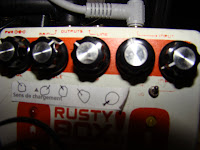
I can go from pretty clean to total noise dirt depending on my strike. This little guy contributes quite a lot to that! Here’s a little image showing my starting knob positions for getting myself set up. Yes, I drew those knob positions myself, thanks very much!
From the Tronographic web site: MID CUT DEMO, PRE-AMP DEMO, BASS VI DEMO
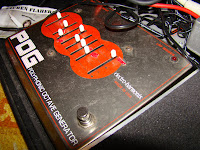
This brings us to the obvious necessary transformation that brings the bass into the guitar’s tonal range. The ElectroHarmonix Polyphonic Octave Generator is my weapon of choice. I use it to shift the bass signal up both one and two octaves, with very little clean signal passed and no suboctave. I detune the shifted sounds a little to add some dissonance and fear to the sound. The use of the two octaves makes the bass sound a little bit more like an organ than a guitar, but that kind of works for me.
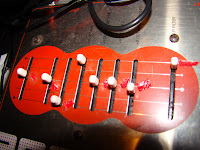
It also results in changes in dissonance depending on how hard the strings are struck. If I give the strings a good whack, lots of dissonance. If I play gently, a fairly consonant signal. The image to the left shows my initial settings for this pedal (marked with red tape, some of which is coming off or has come off).
From there, I send the signal to a volume pedal.
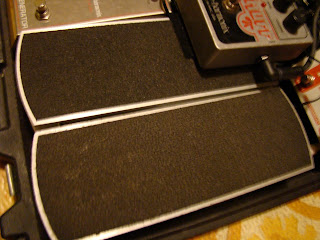
I use an Ernie Ball Volume Pedal Jr. to control the level of the “guitar” half of the rig. This gives me the ability to play with full guitar, partial guitar, or no guitar (just bass!).
(Ignore the second volume pedal and the Big Muff pedal in the image. While those are on my board, they are not used at all in this band. I always think I want to incorporate the Big Muff, but I never have found a way to make it work.)
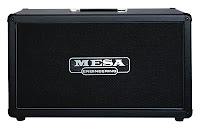
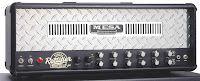 Finally, I send the signal to a Mesa Single Rectifier amplifier and Mesa 212 cabinet. I use the clean channel, but I push the gain up really high (so it’s not actually so clean). Depending on how the tubes and pedals are feeling that day (and how much I’ve messed up tiny settings in this highly non-linear system), I sometimes have to crank the mids. I also sometimes have to drop the mids!
Sometimes in the studio, we have also taken the signal from the POG stage of the system while tracking and reamped it using software amplifier simulators to enhance the sound, particularly the low mids, which can sometimes be cranky and unpredictable.
That’s it! Let me know if you have any questions about it!